I have just met the self-titled "Archdruid" from next door. It being a Sunday she was out for a stroll for a traditional Sunday lunchtime "bracer", as she called it, at the White Horse. I was of course just returning from our 10 am morning worship.
The clocks going forward caught a few members of our church out this morning! How we laughed that they arrived exactly one hour late for the service. I'm pleased to say that we brought the "Prayers for Notorious Sinners" forward this morning - to just before we "just moved into a Time of Worship" for a second time- and as a result they mostly came in during the reading. So although they missed the chance to encounter God in prayer and the first and second times of worship they were still able to hear the whole sermon and join in the congregational response and the third and fourth times of worship.

Showing posts with label Preaching. Show all posts
Showing posts with label Preaching. Show all posts
Sunday, 25 March 2012

Saturday, 7 January 2012
Wandering Attention in Sermons
It is a sad day, Dear Readers.
I have come out to Catthorpe to say a sad farewell to the old M6 viaduct, which is being demolished this weekend. One of my favourite motorway viaducts in the South Midlands.
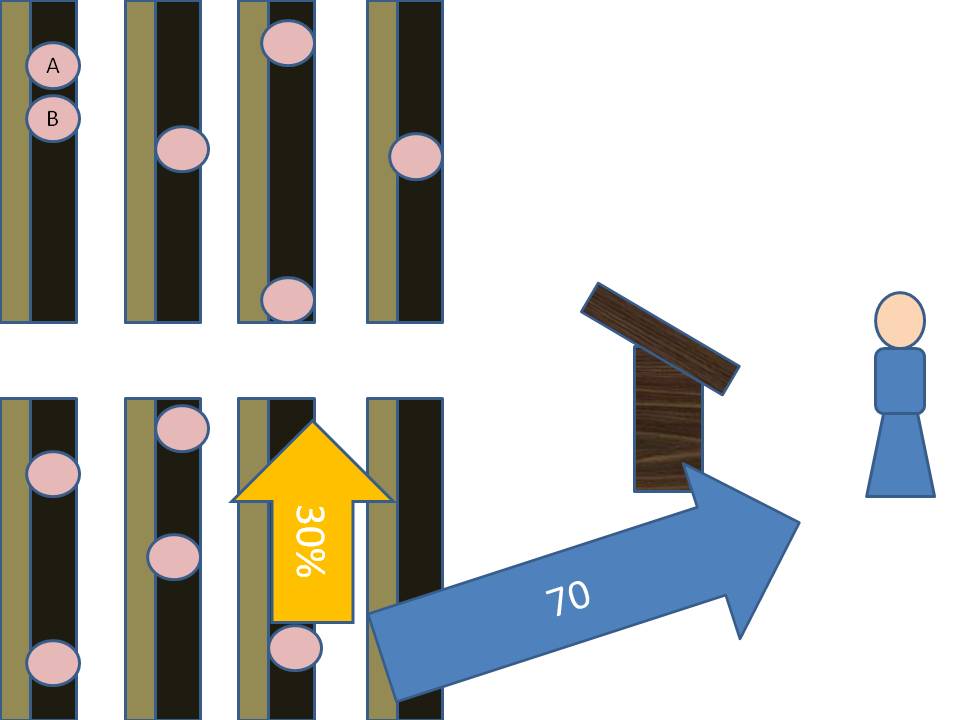
Still, as Drayton very kindly drove me up here I "redeemed the time" as he kept referring to it, by completing my analysis of the differing expectations and actualities in where preachers and their congregations are focussing their thoughts and attention during a sermon. I hope the following diagrams make this clear.
Preacher's Focus - As the Congregation Expect it
The preacher is spending a good part of his or her time focussing on the congregation - although also paying plenty of attention to the text, thus staying on course and honouring the time spent during the week / last night / in the loo before the service writing the sermon. The preacher is also staying alert to the Holy Spirit (golden arrow) so as to be responsive to both the congregation and the text.

Congregation's Focus - as the Preacher expects it
We will pay little attention to our old friends "A" and "B", as we know where their attention is.
The other people in the other side of the congregation, however, should be splitting their attention between what the preacher has to say, and the "still small voice".

What can actually happen is that the preacher gets hung up on the relationship with the congregation - are they all watching me? Are they looking out for me to fail? Have I got a spot on my nose? Am I making a fool of myself....?

Congregational Focus - Reality
Whereas in fact, of course, the congregation aren't thinking any such things. In fact, they are splitting their attention between the wall-hangings, the trouble at work last Friday, the baby in the back row that sounds like it might be about to cry, the attractive person in the row behind, and a serious consideration of what's for lunch. Every now and then they'll notice someone at the front still appears to be talking - and occasionally ask God whether he can make it stop. Or, for I would not want to appear overly-cynical, they accidentally catch something inspirational and/or controversial, and refer it to God for adjudication.

I have come out to Catthorpe to say a sad farewell to the old M6 viaduct, which is being demolished this weekend. One of my favourite motorway viaducts in the South Midlands.
Still, as Drayton very kindly drove me up here I "redeemed the time" as he kept referring to it, by completing my analysis of the differing expectations and actualities in where preachers and their congregations are focussing their thoughts and attention during a sermon. I hope the following diagrams make this clear.
Preacher's Focus - As the Congregation Expect it
The preacher is spending a good part of his or her time focussing on the congregation - although also paying plenty of attention to the text, thus staying on course and honouring the time spent during the week / last night / in the loo before the service writing the sermon. The preacher is also staying alert to the Holy Spirit (golden arrow) so as to be responsive to both the congregation and the text.

Congregation's Focus - as the Preacher expects it
We will pay little attention to our old friends "A" and "B", as we know where their attention is.
The other people in the other side of the congregation, however, should be splitting their attention between what the preacher has to say, and the "still small voice".
The preacher's focus - reality

Congregational Focus - Reality
Whereas in fact, of course, the congregation aren't thinking any such things. In fact, they are splitting their attention between the wall-hangings, the trouble at work last Friday, the baby in the back row that sounds like it might be about to cry, the attractive person in the row behind, and a serious consideration of what's for lunch. Every now and then they'll notice someone at the front still appears to be talking - and occasionally ask God whether he can make it stop. Or, for I would not want to appear overly-cynical, they accidentally catch something inspirational and/or controversial, and refer it to God for adjudication.

So my conclusion, Dear Readers, is this. Preachers pay too much attention to themselves because they worry what the congregations think about them. But they shouldn't because, on the whole, the congregations don't worry that much. In fact, they'd quite like the preachers to do well. I think there's the start of a virtuous circle here, but best not draw too much attention or we'd all start looking at the wrong things again.
Sunday, 30 October 2011
Living by Numbers
It is without doubt that every word of the Good Book is God-breathed. Every paragraph a divine message. Each clause and semi-colon pondered in the Wisdom Ineffable in the long years before Time began. And some of the truths are quite obvious. For examples, the meanings of that section outlawing transvestitism is self-evident. Whereas where there are sections that talk about mixing different materials in making cloth, or putting fringes on your clothes, clearly we have to understand the context. We must try to gather together the meaning that God was intending for us today, who wear poly-nylon shirts and do not need fringes. And other sections are more complex still, and require great prayer and effort to understand
And so, my friends, today I completed my great sermon on the secrets that have been encoded into the Book of Numbers. It is well known, I believe, that the Book of Numbers has a lots of numbers in it. And what does it matter to us if there were forty and six thousand and five hundred of the tribe of Reuben, but fifty and nine thousand and three hundred of Simeon? Well, after years of study I believed I had apprehended the meaning of every number in Numbers. And I revealed them to my congregation this morning.
Brothers (and sisters, suitably-instructed by a male relative or pastor, for this is strong meat) - I cannot pretend that the exposition of every single number in Numbers, and its meaning, is by any measure a short exercise. Our service started at 10am as normal, and by the time I was reaching the final set of numeric meanings I noticed how late it was becoming.
And so I suggested to my flock that, given the lateness of the hour, we could simply allow our morning devotions to be joined directly onto the evening praise that sanctifies our rest. Imagine my shock and surprise when they stormed the pulpit, ripped my sermon to shreds - the last twelve points as yet unpreached - and ran out of the chapel to find something to eat. Ah me, I will put it down to low blood sugar. Next time I have a serious sermon to preach, I will have to arrange to have caramel crème biscuits (not bourbons, which could over-excite) passed around after every few points, to enhance the congregational stamina.
Brothers (and sisters, suitably-instructed by a male relative or pastor, for this is strong meat) - I cannot pretend that the exposition of every single number in Numbers, and its meaning, is by any measure a short exercise. Our service started at 10am as normal, and by the time I was reaching the final set of numeric meanings I noticed how late it was becoming.
And so I suggested to my flock that, given the lateness of the hour, we could simply allow our morning devotions to be joined directly onto the evening praise that sanctifies our rest. Imagine my shock and surprise when they stormed the pulpit, ripped my sermon to shreds - the last twelve points as yet unpreached - and ran out of the chapel to find something to eat. Ah me, I will put it down to low blood sugar. Next time I have a serious sermon to preach, I will have to arrange to have caramel crème biscuits (not bourbons, which could over-excite) passed around after every few points, to enhance the congregational stamina.
Tuesday, 23 August 2011
Naming and Not Shaming
It is a common belief, Brothers and Sisters, that the Internet, by opening out our view of the world, is a good thing. And of course, without the Internet people would not have the chance to read my pious and devout thoughts. But consider - godly believer or pagan groping towards the light as ye may be - consider that if you are reading these words, then even on the same page there may be ghastly and ungodly thoughts expressed by my neighbour and landlady, the soi-disant "Archdruid" Eileen.
A case in point came when I noted on the side-bar of this blog a posting on the Biblical Preaching Blog regarding identifying individuals. Naturally, I expected some kind of advice on the correct policy regarding naming and shaming notorious sinners in the congregation - what period of public repentance we should expect from them; whether we should ask them to sit in a special "naughty pew" - whether simply to ban them from the congregation, if they have not already walked out, for a period of time.
But no, it would seem instead these are guidelines about how not to embarrass named, known individuals. Well, Brothers (and suitably-guided Sisters, perhaps by a husband or pastor), my first problem with the instructions in this otherwise helpful post is that I can't remember everybody's name every time. Certainly I have a good memory for people's sins, but a poor one for names. So sometimes, instead of saying "Joe! Do you have anything you want to bring before the Lord?" I may have to resort to "Young man who came to me for advice with his attraction to his wife's sister - do you have anything you want to bring before the Lord? Apart from the obvious, of course." You can see that this is not always the best way to identify people.
So my guidance on naming people would include the following:
Do not choose people at random during the early parts of worship and ask them what good thing has happened to them this week. This is grievous to the Lord - he does not approve of "random". Instead wait, pray, and discern who to ask.
If you call someone to the front for prayer when they are going through a difficult time, and if they have not cried within five minutes, stop asking them sad questions. It isn't fair to press too hard.
When preaching, giving examples of people in the congregation is always a powerful way to show the power of prayer for healing. But there are certain ailments, even when healed, that people would rather you did not mention. I discovered this the other week. I was celebrating Brian's being able to sit in his pew without a comfy cushion for the first time in three years, but Brian intimated to me later that he would rather I had not drawn anyone's notice to him. Naturally I rebuked him - the Lord has spoken, who will not prophesy? - but the point was taken. When he is healed of his erectile dysfunction I will warn him, and he can stay away if he would rather not be the centre of attention.
When preaching on repentance, be sensitive in what you reveal of people in the congregation. If they have repented of their sins in the last five or six weeks ago, their sin and pain may still be very raw. I would advise always leaving it six months before including the specific former sins of congregation members in my sermons - by that stage we can be sure their repentance is strong and their restoration secure.
Naming couples with sexual problems is always wrong. You must preserve anonymity at all times in these cases. But these people need the congregation to pray for them. I'd suggest hedging it round with comments like "There is a couple in the congregation that needs prayer for their private life. I can't tell you who they are - but they have been coming to church for three years now. He has a busy job as a quantity surveyor. And they believe that having a six-year-old and a four-year-old - and the younger still in nappies - together with the wife's suspicions about his secretary - is making them too tired. And now let us pray." You see what I have done there - helped the congregation to focus their prayers, while keeping the people prayed for anonymous.
Brothers (and Sisters, although clearly advice on leading worship and preaching will be of no use to you), I firmly believe these examples should help you to keep things earthed while maintaining discretion. Since formulating these rules myself, barely 30% of people I have named in sermons have left the congregation. And these were, I think it's fair to say, the headstrong, rebellious ones in any case.
A case in point came when I noted on the side-bar of this blog a posting on the Biblical Preaching Blog regarding identifying individuals. Naturally, I expected some kind of advice on the correct policy regarding naming and shaming notorious sinners in the congregation - what period of public repentance we should expect from them; whether we should ask them to sit in a special "naughty pew" - whether simply to ban them from the congregation, if they have not already walked out, for a period of time.
But no, it would seem instead these are guidelines about how not to embarrass named, known individuals. Well, Brothers (and suitably-guided Sisters, perhaps by a husband or pastor), my first problem with the instructions in this otherwise helpful post is that I can't remember everybody's name every time. Certainly I have a good memory for people's sins, but a poor one for names. So sometimes, instead of saying "Joe! Do you have anything you want to bring before the Lord?" I may have to resort to "Young man who came to me for advice with his attraction to his wife's sister - do you have anything you want to bring before the Lord? Apart from the obvious, of course." You can see that this is not always the best way to identify people.
So my guidance on naming people would include the following:
Do not choose people at random during the early parts of worship and ask them what good thing has happened to them this week. This is grievous to the Lord - he does not approve of "random". Instead wait, pray, and discern who to ask.
If you call someone to the front for prayer when they are going through a difficult time, and if they have not cried within five minutes, stop asking them sad questions. It isn't fair to press too hard.
When preaching, giving examples of people in the congregation is always a powerful way to show the power of prayer for healing. But there are certain ailments, even when healed, that people would rather you did not mention. I discovered this the other week. I was celebrating Brian's being able to sit in his pew without a comfy cushion for the first time in three years, but Brian intimated to me later that he would rather I had not drawn anyone's notice to him. Naturally I rebuked him - the Lord has spoken, who will not prophesy? - but the point was taken. When he is healed of his erectile dysfunction I will warn him, and he can stay away if he would rather not be the centre of attention.
When preaching on repentance, be sensitive in what you reveal of people in the congregation. If they have repented of their sins in the last five or six weeks ago, their sin and pain may still be very raw. I would advise always leaving it six months before including the specific former sins of congregation members in my sermons - by that stage we can be sure their repentance is strong and their restoration secure.
Naming couples with sexual problems is always wrong. You must preserve anonymity at all times in these cases. But these people need the congregation to pray for them. I'd suggest hedging it round with comments like "There is a couple in the congregation that needs prayer for their private life. I can't tell you who they are - but they have been coming to church for three years now. He has a busy job as a quantity surveyor. And they believe that having a six-year-old and a four-year-old - and the younger still in nappies - together with the wife's suspicions about his secretary - is making them too tired. And now let us pray." You see what I have done there - helped the congregation to focus their prayers, while keeping the people prayed for anonymous.
Brothers (and Sisters, although clearly advice on leading worship and preaching will be of no use to you), I firmly believe these examples should help you to keep things earthed while maintaining discretion. Since formulating these rules myself, barely 30% of people I have named in sermons have left the congregation. And these were, I think it's fair to say, the headstrong, rebellious ones in any case.
Thursday, 4 August 2011
There is no such thing as Sermon Block
It's going to hurt, and I hate to do it, especially with such a good guy. But I'm going to disagree with David Cloake on the subject of "Sermon Block".
My thesis is this.
There is no such thing as Sermon Block.
This is not on the basis of faith - this is on the basis of sound evidence, scientifically gathered.
I have heard many preachers over a couple or so decades.
I have never, in all those years, seen a preacher stand up, remain stationary with his or her mouth opening and closing but nothing coming out, and then sit down again. Even at times of utter stress or total lack of inspiration.
I've heard some real rubbish, that's true.
I've heard someone say they don't agree with space rockets, because they go up into space - the implication being that's where God lives.
I've heard someone preach on the subject of "entropy" to illustrate "sin". The trouble being that (a) the average person in the pew/comfy chair/bean-bag understands "entropy" (which is a physics/chemistry term) far less than "sin" (which you can see all around you in your daily life) and (b) that it wasn't a very good illustration anyway.
I've never heard anyone not preach at all. Never.
My conclusion is that, no matter what agonies the preacher may have had, by 10.30 or thereabouts on a Sunday morning they have something they can preach. It's normally good stuff. It's sometimes brilliant. It sometimes descends to being boring, and occasionally - very occasionally - it's completely wrong-headed. But they always have something to preach. And, as I say, it's overwhelmingly often worthwhile.
You can call it glibness. You can call it the Holy Spirit. You can call it falling back on their ministry (preaching the word) and being blessed through that. But you never hear anyone totally failing to preach a sermon.
Obviously, you'll know otherwise. But I bet the experience was rare.
My thesis is this.
There is no such thing as Sermon Block.
This is not on the basis of faith - this is on the basis of sound evidence, scientifically gathered.
I have heard many preachers over a couple or so decades.
I have never, in all those years, seen a preacher stand up, remain stationary with his or her mouth opening and closing but nothing coming out, and then sit down again. Even at times of utter stress or total lack of inspiration.
I've heard some real rubbish, that's true.
I've heard someone say they don't agree with space rockets, because they go up into space - the implication being that's where God lives.
I've heard someone preach on the subject of "entropy" to illustrate "sin". The trouble being that (a) the average person in the pew/comfy chair/bean-bag understands "entropy" (which is a physics/chemistry term) far less than "sin" (which you can see all around you in your daily life) and (b) that it wasn't a very good illustration anyway.
I've never heard anyone not preach at all. Never.
My conclusion is that, no matter what agonies the preacher may have had, by 10.30 or thereabouts on a Sunday morning they have something they can preach. It's normally good stuff. It's sometimes brilliant. It sometimes descends to being boring, and occasionally - very occasionally - it's completely wrong-headed. But they always have something to preach. And, as I say, it's overwhelmingly often worthwhile.
You can call it glibness. You can call it the Holy Spirit. You can call it falling back on their ministry (preaching the word) and being blessed through that. But you never hear anyone totally failing to preach a sermon.
Obviously, you'll know otherwise. But I bet the experience was rare.
Wednesday, 11 May 2011
The Joy of Spurious Word-play
Preaching can give you a wonderful sense of power. All those eyes looking to you, and ears waiting for your words, for the truth that you alone can bring. Sorry, made the mistake of saying what I really think there for a second. What I meant was that it can give you a humble desire to bring people nearer to the truth.
There are of course nuances in the Biblical text - and things that additional research can shed light on. And preachers often like to go into these areas, as a diverting way of making their preaching more interesting. And in its way it can be a good thing, or at least a neutral one. But there's a trap you can fall into. A brief digression on the Aramaic word "Abba", for example. Most would digress just as far as to say it means "Daddy", and therefore we should look to our father God with the gormless loving wonder of a toddler. The danger of this application is that we end up with a matey familiarity that the word maybe doesn't actually carry. Or maybe the link I've given is wrong. I don't know.You may not realise it to hear me preach, but I'm not actually an expert in 1st Century Semitic Languages.
But this spurious word play opens up all sorts of opportunities for the would-be creative preacher. The best technique is to find a word, not in Aramaic or Greek or Hebrew (or in your native tongue) that sheds a kind of spurious half-light on the subject at hand. Ideally, make sure it's a language there's no danger of anyone in your audience - sorry, congregation - understanding. And then the opportunity to build all sorts of conceptual castles on a dodgy linguistic basis is open to you.
So you discover in your research for a sermon that the word "God" in the ancient language of the Sarawakian people sounds a bit like the word for "Stilton Cheese". You expand the concept - surely this implies that when we say "give us our daily bread" we can expand this meaning to add a wholesome dairy-based analogy? So much more appetising than dry bread alone. For God is more nourishing than mere bread - he is surely our daily provision of protein and fat-soluble vitamins as well - a daily cornucopia of nourishment.
And before you know where you are, you are comparing the colour of the veins in the cheese to the blue of the sky - and explaining how our Father, who is in the (blue) heavens, is our daily cheese. And what colour is the Blessed Virgin assigned in traditional religious painting? Precisely. Before you know it, half an hour has passed. The preacher has demonstrated how clever he/she is. We have all been let into a secret of Heaven that would have passed us by otherwise. We have a whole set of thoughts on God that we wouldn't have otherwise. and we can all go home happy, in the knowledge that, as Graham Chapman once sense, indeed Blessed are the Cheesemakers. And we can happily sing along to the children's song that the preacher has written specially for the day, "We wanna be Cheesemites for the Lord".
All of this diversion was caused this morning based on a reading of Deuteronomy 6 in the New Revised Standard Version. But I guess that's going to have to wait for another day now.
There are of course nuances in the Biblical text - and things that additional research can shed light on. And preachers often like to go into these areas, as a diverting way of making their preaching more interesting. And in its way it can be a good thing, or at least a neutral one. But there's a trap you can fall into. A brief digression on the Aramaic word "Abba", for example. Most would digress just as far as to say it means "Daddy", and therefore we should look to our father God with the gormless loving wonder of a toddler. The danger of this application is that we end up with a matey familiarity that the word maybe doesn't actually carry. Or maybe the link I've given is wrong. I don't know.You may not realise it to hear me preach, but I'm not actually an expert in 1st Century Semitic Languages.
But this spurious word play opens up all sorts of opportunities for the would-be creative preacher. The best technique is to find a word, not in Aramaic or Greek or Hebrew (or in your native tongue) that sheds a kind of spurious half-light on the subject at hand. Ideally, make sure it's a language there's no danger of anyone in your audience - sorry, congregation - understanding. And then the opportunity to build all sorts of conceptual castles on a dodgy linguistic basis is open to you.
So you discover in your research for a sermon that the word "God" in the ancient language of the Sarawakian people sounds a bit like the word for "Stilton Cheese". You expand the concept - surely this implies that when we say "give us our daily bread" we can expand this meaning to add a wholesome dairy-based analogy? So much more appetising than dry bread alone. For God is more nourishing than mere bread - he is surely our daily provision of protein and fat-soluble vitamins as well - a daily cornucopia of nourishment.
And before you know where you are, you are comparing the colour of the veins in the cheese to the blue of the sky - and explaining how our Father, who is in the (blue) heavens, is our daily cheese. And what colour is the Blessed Virgin assigned in traditional religious painting? Precisely. Before you know it, half an hour has passed. The preacher has demonstrated how clever he/she is. We have all been let into a secret of Heaven that would have passed us by otherwise. We have a whole set of thoughts on God that we wouldn't have otherwise. and we can all go home happy, in the knowledge that, as Graham Chapman once sense, indeed Blessed are the Cheesemakers. And we can happily sing along to the children's song that the preacher has written specially for the day, "We wanna be Cheesemites for the Lord".
All of this diversion was caused this morning based on a reading of Deuteronomy 6 in the New Revised Standard Version. But I guess that's going to have to wait for another day now.
Sunday, 17 April 2011
A veritable feast of preaching
You know, Spring Harvest is like redundancies. It's not the people that go that suffer so much - it's those of us that are left behind to carry on.
Take the people at Drayton's chapel. In his absence, his deacon - Mr Obadiah Zebulun - is preaching. He doesn't often get the chance, and he's made the most of it. One of the escapees told me that his sermon, "A few thoughts on Nehemiah 3", started at 5 past 10 and he's still in "Secondly". They've got "Thirdly" through to "Fifthly" to go, then the Conclusion and his half-hour Exhortation and it'll be time for the altar call.
Sometimes you're just glad you're not a Baptist.
Take the people at Drayton's chapel. In his absence, his deacon - Mr Obadiah Zebulun - is preaching. He doesn't often get the chance, and he's made the most of it. One of the escapees told me that his sermon, "A few thoughts on Nehemiah 3", started at 5 past 10 and he's still in "Secondly". They've got "Thirdly" through to "Fifthly" to go, then the Conclusion and his half-hour Exhortation and it'll be time for the altar call.
Sometimes you're just glad you're not a Baptist.
Saturday, 5 March 2011
Keeping people awake during sermons
Oh dear, I knew this would happen. Hnaef does quite pride himself on his oratory.
But I've asked Mrs Hnaef to confiscate his Amiga 128K for a week or too, so he can't read the following. Because I feel I owe it to anyone who was going to follow Hnaef''s instructions on preaching, to let you know this.
Now Eileen's a bit of a paradox sometimes. You could say that she's quick to anger, remembering sins unto the 83rd generation, regarding the best balance between justice and mercy as being pitiless retribution. But she is loyal to her friends. And she doesn't like to see Hnaef hurting. So she asked Young Keith and I to organise some ways to keep the congregation awake during his sermons. Now, we looked at the book recommended by Revd Catriona, but that was written from the perspective of the people in the congregation - the "punters" as Eileen calls them, or the "victims" as she sometimes refers to Drayton's congregation, or the "audience" as Hnaef accidentally says occasionally. And we needed something more top-down. So when the Moot House was built, we built the following in as gentle ways of keeping people awake during particularly dull sermons. Some of them, oddly enough, overlapping with Bernie Ecclestone's methods of livening up Grand Prix.
So first for the obvious and most clearly Beaker-approved - we burn rosemary oil in the scented oil burners, as a quick aromatherapeutic method of keeping the people alert.
And then, aware that some think aromatherapy a quack pseudo-science, we use far more scientific homoeopathic methods. We put one grain of cocoa in the early-morning coffee in the Dining Room before Sermon Days. We reckonthat that, infinitely diluted as the Beaker Folk drink strong black coffee to wake themselves up after the previous night's celebrations, the homeopathic reaction caused by the cocoa will cause alertness. We think the black coffee may help as well.
On a more immediate basis, we can use direct physical techniques. For example, during particularly boring sermons we blow progressively colder air through the Moot House to wake people up. However this can have a regressive effect - when the Archdruid preached on "Some finer points of the spiritual significance of the microcrystal geology of the Rollright Stones" we were blowing freezing cold air through at hurricane force. Several Beaker Folk had to be treated for hypothermia.
But we found that people started wrapping up as well as an Anglican in April, to stop themselves being rudely awakened like that. So then we tried the "gentle use of the fire sprinklers" technique. This had a couple of disadvantages - one being that it became hard to see the words of the choruses on the screen through a forest of umbrellas. The other being that some people, finding they were sitting in puddles of liquid, thought they'd had an - ahem - "accident". Still, the rapidity with which they left the building woke up some of their neighbours.
And of course the "indoor rain" technique had a synergistic effect the day we experimented with giving people mild electric currents through their seats. A couple of people received such a shock that they thought they'd had a spiritual experience.
The "randomly spontaneously combusting hymbooks" technique is great as well. You generally find that the old MHB can hold more fuel, but then there are those who think "Mission Praise" deserves it more.
The other thing we occasionally experiment with is the voice synthesiser on the pulpit microphone. You'd be amazed how people wake up when we drop Hnaef's voice a couple of octaves (or just the one, in the Archdruid's case) and add an echo chamber. If you're half-asleep in church it can give you quite a stir to think that God's just started talking to you.
But occasionally with the Archdruid we have to go to the opposite extreme. Young Keith and I also keep large stocks of lavender to put in the burners, and Enya ready on the PA. Sometimes when Eileen's preaching we have to calm people down quick, before they rush the pulpit. And of course that's when we also have unleash the flock of chickens into the Moot House. She can then normally make her escape in the confusion.
But I've asked Mrs Hnaef to confiscate his Amiga 128K for a week or too, so he can't read the following. Because I feel I owe it to anyone who was going to follow Hnaef''s instructions on preaching, to let you know this.
Now Eileen's a bit of a paradox sometimes. You could say that she's quick to anger, remembering sins unto the 83rd generation, regarding the best balance between justice and mercy as being pitiless retribution. But she is loyal to her friends. And she doesn't like to see Hnaef hurting. So she asked Young Keith and I to organise some ways to keep the congregation awake during his sermons. Now, we looked at the book recommended by Revd Catriona, but that was written from the perspective of the people in the congregation - the "punters" as Eileen calls them, or the "victims" as she sometimes refers to Drayton's congregation, or the "audience" as Hnaef accidentally says occasionally. And we needed something more top-down. So when the Moot House was built, we built the following in as gentle ways of keeping people awake during particularly dull sermons. Some of them, oddly enough, overlapping with Bernie Ecclestone's methods of livening up Grand Prix.
So first for the obvious and most clearly Beaker-approved - we burn rosemary oil in the scented oil burners, as a quick aromatherapeutic method of keeping the people alert.
And then, aware that some think aromatherapy a quack pseudo-science, we use far more scientific homoeopathic methods. We put one grain of cocoa in the early-morning coffee in the Dining Room before Sermon Days. We reckonthat that, infinitely diluted as the Beaker Folk drink strong black coffee to wake themselves up after the previous night's celebrations, the homeopathic reaction caused by the cocoa will cause alertness. We think the black coffee may help as well.
On a more immediate basis, we can use direct physical techniques. For example, during particularly boring sermons we blow progressively colder air through the Moot House to wake people up. However this can have a regressive effect - when the Archdruid preached on "Some finer points of the spiritual significance of the microcrystal geology of the Rollright Stones" we were blowing freezing cold air through at hurricane force. Several Beaker Folk had to be treated for hypothermia.
But we found that people started wrapping up as well as an Anglican in April, to stop themselves being rudely awakened like that. So then we tried the "gentle use of the fire sprinklers" technique. This had a couple of disadvantages - one being that it became hard to see the words of the choruses on the screen through a forest of umbrellas. The other being that some people, finding they were sitting in puddles of liquid, thought they'd had an - ahem - "accident". Still, the rapidity with which they left the building woke up some of their neighbours.
And of course the "indoor rain" technique had a synergistic effect the day we experimented with giving people mild electric currents through their seats. A couple of people received such a shock that they thought they'd had a spiritual experience.
The "randomly spontaneously combusting hymbooks" technique is great as well. You generally find that the old MHB can hold more fuel, but then there are those who think "Mission Praise" deserves it more.
The other thing we occasionally experiment with is the voice synthesiser on the pulpit microphone. You'd be amazed how people wake up when we drop Hnaef's voice a couple of octaves (or just the one, in the Archdruid's case) and add an echo chamber. If you're half-asleep in church it can give you quite a stir to think that God's just started talking to you.
But occasionally with the Archdruid we have to go to the opposite extreme. Young Keith and I also keep large stocks of lavender to put in the burners, and Enya ready on the PA. Sometimes when Eileen's preaching we have to calm people down quick, before they rush the pulpit. And of course that's when we also have unleash the flock of chickens into the Moot House. She can then normally make her escape in the confusion.
Wednesday, 2 March 2011
Are you preaching boring sermons?
It's a real problem. It's like halitosis or - you know - B.O. - the problem nobody will tell you about. You may think your exposition on the subtle differences between the stanzas in Psalm 119 is riveting. But nobody's going to tell you the truth, are they? They'll just say "nice sermon, vicar/minister/druid/pastor/gorgeous" (delete as appropriate) on the way out the door just the same.
Well, relax. Because I'll tell you. Here are the questions to ask yourself.
1) Have people started suggesting that everyone should have coffee before the service, rather than afterwards?
2) Are people shouting "Amen" because they agree with you? Or because they reckon it surely must be the prayers by now?
3) Do the sidespeople have the new responsibility of holding mirrors in front of people's mouths, to check that they're merely asleep?
4) Have the stewards installed a Pro Plus vending machine in the foyer?
5) Do you have to have a break halfway through the sermon, so people can buy an ice cream?
6) Do you ever hear cries from the congregation during the sermon? Things like "take him now, Lord"?
7) Be honest - are you on your 33rd week in your series on the Book of Romans? And still in Chapter 1?
8) Is your entire spiritual message "let's just be nice to people"? (Not far from St John's message, apparently, but then he was a saint).
9) Has the congregation installed a clock on the back wall of a church? Or, more ominously, a countdown timer?
10) Has the floor of the pulpit mysteriously been replaced with what looks like it might be a trap-door? Is the Head Server holding a new lever that has appeared in the wall of the sanctuary, and wearing a determined look?
11) Do all the parents in the congregation get a sudden urge to check how little Johnny/Joanie is doing in Sunday Club just after you stand up?
12) Is the response to your prayer before the sermon "Amen"? Or a deep sigh?
13) Has someone put a Church Times through your door with jobs that might interest you high-lighted?
14) Do you find that pages of your sermon mysteriously "go missing" in the vestry just before the service?
15) Are people suggesting that you might be heading towards the Ordinariate? This one is particularly worrying if you are a woman.
16) Have cold showers been installed in the box pews? No, that's not to calm them down during the sermon. It's to wake them up at the end.
17) The "Tumble Weed Problem" keeps being discussed at the Moot or Congregational Meeting. You don't understand what everyone's talking about.
Well, relax. Because I'll tell you. Here are the questions to ask yourself.
1) Have people started suggesting that everyone should have coffee before the service, rather than afterwards?
2) Are people shouting "Amen" because they agree with you? Or because they reckon it surely must be the prayers by now?
3) Do the sidespeople have the new responsibility of holding mirrors in front of people's mouths, to check that they're merely asleep?
4) Have the stewards installed a Pro Plus vending machine in the foyer?
5) Do you have to have a break halfway through the sermon, so people can buy an ice cream?
6) Do you ever hear cries from the congregation during the sermon? Things like "take him now, Lord"?
7) Be honest - are you on your 33rd week in your series on the Book of Romans? And still in Chapter 1?
8) Is your entire spiritual message "let's just be nice to people"? (Not far from St John's message, apparently, but then he was a saint).
9) Has the congregation installed a clock on the back wall of a church? Or, more ominously, a countdown timer?
10) Has the floor of the pulpit mysteriously been replaced with what looks like it might be a trap-door? Is the Head Server holding a new lever that has appeared in the wall of the sanctuary, and wearing a determined look?
11) Do all the parents in the congregation get a sudden urge to check how little Johnny/Joanie is doing in Sunday Club just after you stand up?
12) Is the response to your prayer before the sermon "Amen"? Or a deep sigh?
13) Has someone put a Church Times through your door with jobs that might interest you high-lighted?
14) Do you find that pages of your sermon mysteriously "go missing" in the vestry just before the service?
15) Are people suggesting that you might be heading towards the Ordinariate? This one is particularly worrying if you are a woman.
16) Have cold showers been installed in the box pews? No, that's not to calm them down during the sermon. It's to wake them up at the end.
17) The "Tumble Weed Problem" keeps being discussed at the Moot or Congregational Meeting. You don't understand what everyone's talking about.
Monday, 7 February 2011
Preaching by Numbers
Some kind of levity broke out yesterday mornin as I preached on the topic of Balaam and his talking ass. I realise that it is a tricky and unusual passage. But nevertheless, I expected rapt attention as I unfolded the important question of why God spoke through a donkey, and how even a magic-working unbeliever could be compelled to hear the word of the Lord. But I ended up preaching through a barrage of sniggers. I passed this information on to Eileen when I saw her later to discuss the rental for the use of the Shuttle, but she went off giggling.
I was more thin-skinned than normal yesterday, perhaps. Indeed, I felt as much use as a £50million Spaniard in West London. For I received a text from Marjorie while she was still somewhere in the borderlands between Bedfordshire and Northamptonshire, on her way towards Husborne Crawley with a Shuttle-load of converts. The text read "We've just found a Baptist church. We're going to check it out for heresy. We'll see you later."
Marjorie eventually arrived at 3pm, and I had to drive them all home again as Marjorie declared herself to be rather tired after a prolonged harangue at the preacher. The others declared that they had had a fantastic day, heard the Gospel preached superbly - by Marjorie, and wondered whether they could have a travelling service every week.
I did offer to run them home after the evening service - explaining that I was going to preach on "Some lesser-known aspects of household discipline during the Babylonian Exile". But they said if I wasn't going to do the joke about Balaam's ass again, they'd rather go back straight away.
Still, they have given me much to consider. I wonder where I could find a 40-seater coach with a fitted pulpit?
I was more thin-skinned than normal yesterday, perhaps. Indeed, I felt as much use as a £50million Spaniard in West London. For I received a text from Marjorie while she was still somewhere in the borderlands between Bedfordshire and Northamptonshire, on her way towards Husborne Crawley with a Shuttle-load of converts. The text read "We've just found a Baptist church. We're going to check it out for heresy. We'll see you later."
Marjorie eventually arrived at 3pm, and I had to drive them all home again as Marjorie declared herself to be rather tired after a prolonged harangue at the preacher. The others declared that they had had a fantastic day, heard the Gospel preached superbly - by Marjorie, and wondered whether they could have a travelling service every week.
I did offer to run them home after the evening service - explaining that I was going to preach on "Some lesser-known aspects of household discipline during the Babylonian Exile". But they said if I wasn't going to do the joke about Balaam's ass again, they'd rather go back straight away.
Still, they have given me much to consider. I wonder where I could find a 40-seater coach with a fitted pulpit?
Sunday, 21 February 2010
Things you don't want to hear a Preacher say
We don't like the concept of "preaching" really, at Husborne Crawley. It puts the preacher in a power relationship with the preachees - implying that the preacher has access to knowledge and oratorical power that the preachees do not possess. Whereas the evidence round here is that the preacher, on the whole, has none of these things.
Still, since the other alternatives to preaching - "oratory", "rambling", "musing", "facilitating an ongoing thought-enhancement and spiritual development process in a theological context" are all equally weak, we'll stick with "preaching" for the purposes of this discussion.
In any case, here's some things that may help all members of the Community to improve their inspirational aspirations.
"But enough about God. Let's talk about how clever I am."
"So I've sketched out the socio-dynamics of the Essene fellowship, giving summary accounts of five or six of the most recent views of the archaeologists and theologians. Now let's move to point one of this six-point sermon..."
"I've learnt that people remember more of what they see, than of what they hear. So after that account of the sins of the Israelite men with the Moabite women, I'll be giving a demonstration of those sins with my wife. Just as soon as we've put our teeth somewhere safe - we wouldn't like them to fly out...."
"So I hope I've been very clear on the spiritual damage you can suffer from hidden sin. Now then - Hnaef has the roaming mic - who's the first to confess?"
"I am the god of hell fire!"
"I'm pleased to see that the use of the word "mercy" in that verse in Isaiah was the subject of my MA thesis. So I'd like to read it to you now. In full."
"You know, I'm really regretting that prawn curry last night. And the beer seemed a bit cloudy as well. Now, this pulpit is quite high so I'm quite pleased to see there's no-one in the front six rows."
"OK - I'm the one with the preaching gown. I'm the one up here with the big book. So everybody listen to me. I'm right."
"I'm pleased to say that God gave me a direct message last night. And oooh he had a lot to say."
"I'm afraid I'll have to preach the second half of this sermon extempore. Not because I've had a sudden burst of inspiration. No - the computer ran out of memory and crashed after printing off the first half."
"But I see it is time for the Evening Service to begin. So in conclusion..."
"I really wanted to focus on "giving" this morning. And it so happens that I have here the records of everyone's standing orders. So, let's see... Albert Aldwincle - £20 per month... Rhoda Benson - £15...."
"I've felt so inspired this morning that I'm going to issue an altar call. The doors are locked, and no-one's going home until we've had twenty new converts."
Still, since the other alternatives to preaching - "oratory", "rambling", "musing", "facilitating an ongoing thought-enhancement and spiritual development process in a theological context" are all equally weak, we'll stick with "preaching" for the purposes of this discussion.
In any case, here's some things that may help all members of the Community to improve their inspirational aspirations.
"But enough about God. Let's talk about how clever I am."
"So I've sketched out the socio-dynamics of the Essene fellowship, giving summary accounts of five or six of the most recent views of the archaeologists and theologians. Now let's move to point one of this six-point sermon..."
"I've learnt that people remember more of what they see, than of what they hear. So after that account of the sins of the Israelite men with the Moabite women, I'll be giving a demonstration of those sins with my wife. Just as soon as we've put our teeth somewhere safe - we wouldn't like them to fly out...."
"So I hope I've been very clear on the spiritual damage you can suffer from hidden sin. Now then - Hnaef has the roaming mic - who's the first to confess?"
"I am the god of hell fire!"
"I'm pleased to see that the use of the word "mercy" in that verse in Isaiah was the subject of my MA thesis. So I'd like to read it to you now. In full."
"You know, I'm really regretting that prawn curry last night. And the beer seemed a bit cloudy as well. Now, this pulpit is quite high so I'm quite pleased to see there's no-one in the front six rows."
"OK - I'm the one with the preaching gown. I'm the one up here with the big book. So everybody listen to me. I'm right."
"I'm pleased to say that God gave me a direct message last night. And oooh he had a lot to say."
"I'm afraid I'll have to preach the second half of this sermon extempore. Not because I've had a sudden burst of inspiration. No - the computer ran out of memory and crashed after printing off the first half."
"But I see it is time for the Evening Service to begin. So in conclusion..."
"I really wanted to focus on "giving" this morning. And it so happens that I have here the records of everyone's standing orders. So, let's see... Albert Aldwincle - £20 per month... Rhoda Benson - £15...."
"I've felt so inspired this morning that I'm going to issue an altar call. The doors are locked, and no-one's going home until we've had twenty new converts."
Subscribe to:
Posts
(
Atom
)