Well, it wouldn't be Easter if the Guardian didn't have something running down Christianity, would it? And this year's volunteer for the warm lager-filled chalice is
Simon Jenkins.
It's impressive really. Most Guardianistas would normally be arguing for disestablishment, and getting everyone up and fretty. But not Simon. Instead he argues that the Church should be "fully nationalised".
His claims for how this would work appear to be almost entirely drivel, but let's go with it shall we. It's Easter, after all.
Apparently, churches are currently "locked and inaccessible". Very true. Many rural churches are - often for fear of theft. The wild and lovely church of St Joliet in Cornwall, where Thomas Hardy wooed his Emma and then
turned the whole experience into a book, has a rather plaintive sign:
 |
| "The Brass and other items have been stolen" |
See, the vicar and PCC of St Joliet are prepared to leave the place open, for people's spiritual recreation. Even when they were at risk of damage or theft of the valuables. But would Simon Jenkins's putative committee subletting the running of the building be prepared - even be allowed to do that? Nope. The building would only be open if someone were prepared to guard it. And even in a Jeremy Corbyn / Guardian world of unlimited money trees, they wouldn't pay for 12,000-plus full-time guardians (and co-guardians, for safety, and holiday cover) to look after the Church of England's stock. No. They'd need unpaid people to do that. Unpaid people who could do it already, if they wanted to.
Simon Jenkins tells us that one reason why the Church of England should have its buildings nationalised (I assume he doesn't want to nationalise the actual church - firstly you could argue it already is, and secondly it's a heck of a mess), is because "it resolutely refuses to serve the nation". This is expressed, in Simon Jenkins' imaginary world, in the way that "most"of its parishes "refuse to marry or bury outsiders".
This is pure rubbish. There are rules for who parishes of the Church of England can marry and bury. First up, burying. The C of E will bury anybody who lived in their parishes. According to the
FuneralZone website, "clergy will lead a funeral service for anyone living within their parish". But to be honest, it's probably better to wait until they're
not living within the parish. Likewise
on weddings: you can be married if you or your spouse-to-be live in the parish, or if you have a "qualifying connection". You don't have to believe anything, or you can be a tree-frog worshipper. As long as you've got some kind of reasonable connection (and as long as you aren't planning to marry someone within the same genital grouping), you should be fine. I believe quite a lot of people are working on the whole marrying people with the same - ahem - equipment as well. They'll get there.
Let's move onto how this is all going to work. First up, the Church buildings will be "taken into state ownership, and then transferred to local parish or town councils". So the public bodies that generally run park benches and bits of greenery will now be expected to be manage Grade 1 and 2* listed buildings on land worth, generally, millions of pounds. And remembering how much money it takes to keep the buildings in a reasonable state, how will Simon Jenkins pay for this? Oh yeah. I forgot. He writes in the Guardian. Tax.
"Parishes would be legally free to levy a local church tax to pay for the upkeep of their most prominent and historic building. There is nothing novel in this. There is a church tax in Germany, Italy and much of Scandinavia – sometimes with opt-outs if people object."
Thing about Germany is that the taxes don't just pay for the buildings. They pay for the ministers as well. Don't know if Simon Jenkins is so on-board with this. Don't know if anyone else would be, given it's an extra 8 or 9% on the income tax in Germany, for instance. I know I'd be ticking the opt-out.
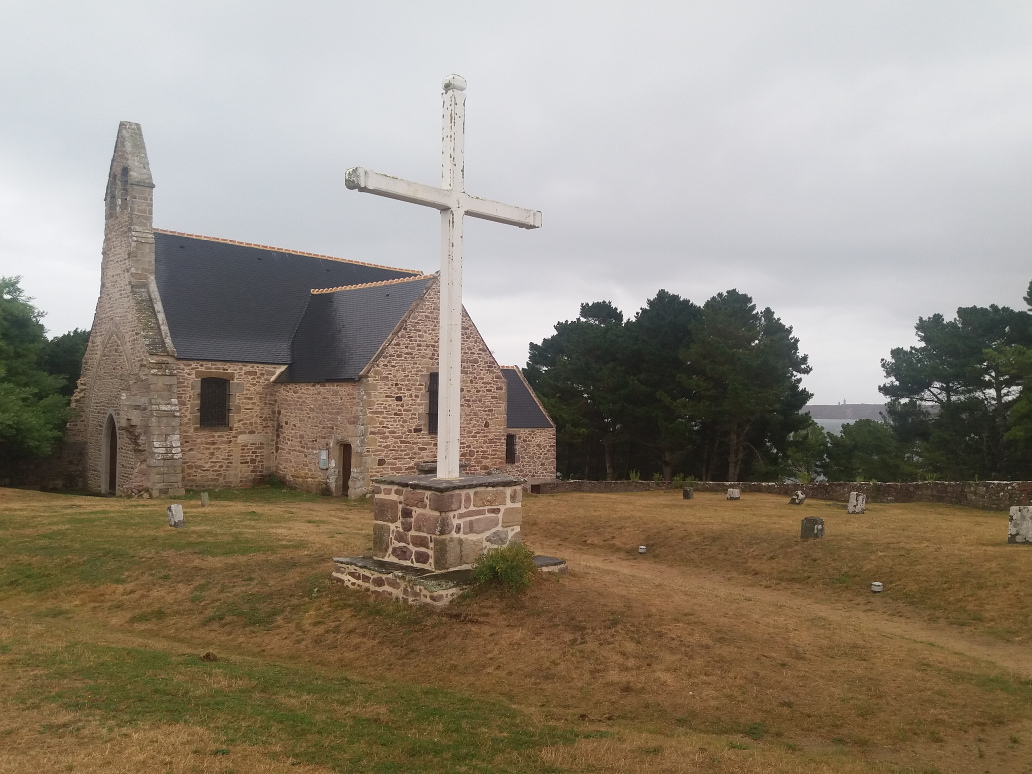
No, what Simon Jenkins is probably thinking of is more like France. Where the State owns the buildings, but doesn't pay for the ministers. Which is why it has 40,000 plus buildings and only 7,000 priests. Let me share with you a lovely church:
 |
| Pleherel-Plage Church |
Pleherel-Plage Church near Cap Fréhel in Brittany. It's gorgeous, it's well-kept, it's barely ever used for community or Church events. Welcome to Simon Jenkins' world of churches. Immaculate, unused and empty.
But no - Simon Jenkins has some great ideas for how to use our nation's stock of ancient buildings. "Even if chancels remain in religious use, naves, aisles, towers and churchyards should be adapted for other purposes, with some regulatory latitude. This might embrace not just local shops, but creches, libraries, day centres for the elderly, places to collect a pension, pick up a parcel, connect to wifi, meet a friend or have a drink." So villages that have lost their pubs and post offices due to financial constraints will suddenly have the money not only to pay for licensees and post masters/mistresses. But they're also going to find the people to look after the elderly, run the library and keep an eye on your nippers for you.
And some people say it's religious people that believe in unbelievable things.
To quote Simon Jenkins, "We are saddled with these fine buildings."
"Blessed" might be a better word. But you know what, go ahead - take them into state ownership. Those buildings are worth millions. Some are in fantastic locations. Will keep the Church in stipends forever. While the Church can move into school halls and pubs and gyms, keep warm and worship God.
Simon Jenkins, go home. You're writing drivel.

 is probably the book for you.